.png)


Our Story
Pilot Training System (PTS) expands access to professional flight training through college partnerships, local flight schools and free online ground school. Our structured, safety-focused programs help students prepare for aviation careers more affordably and efficiently.
Mission: Affordable, Local, High-Quality Flight Training
Pilot Training System was founded in 2011 with a simple mission: make high-quality flight training more affordable and accessible.
We pursue that mission by:
-
Providing free online ground school
-
Developing affordable college-based pilot programs
-
Improving completion through structured training
-
Preparing students for long-term aviation careers
Company History: From Free Ground School to Collegiate Flight Training
PTS began by offering free online ground school for Private Pilot students and later expanded into Commercial Drone Pilot training. This educational platform has grown into an online aviation community of more than 72,000 members.
In 2023, PTS introduced the Professional Aeronautics Certificate program, combining college-based instruction with hands-on training at approved flight schools.
Today, PTS partners with ten (10) colleges and twelve (12) flight schools across seven states.
Our Vision:
Build a national network of affordable, scalable college flight programs without compromising training quality or aviation safety.
Core Values:
Safety First
Training quality and operational safety always come first.
Integrity
We operate with transparency, accountability and measurable standards.
Service
We continuously improve our programs to reduce costs and help students succeed.
Company Founder: Chris Johnson, PhD, CFI, CFII, MEI
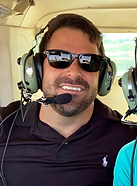
Pilot Training System was founded by Dr. Chris Johnson while he was completing his PhD in Engineering at the University of Wisconsin–Madison. There, he developed flight courses supporting FAA-funded research on aviation weather and pilot decision-making.
Dr. Johnson is a U.S. Air Force veteran, commercial pilot and Certified Flight Instructor. His research later supported U.S. Army-funded simulation work involving artificial intelligence, drones and robotic vehicles.
After serving as a professor at Embry-Riddle Aeronautical University, he left academia to focus full-time on expanding affordable college flight-training programs.